
The internet needs more benches
Plus: The history of the spreadsheet, and how we're failing the Hantavirus test (#571)

This is David, your diligent collector of precious internet magic. You're reading the Weekly Filet, the newsletter for curious minds who love when something makes them go «Huh, I never thought of it this way!». As every Friday, I'm here to help you make sense of what’s happening, and imagine what could be. It's great to have you.
1. The Internet has no benches
«The Internet uniquely brings people together who would have never met in the real world on a global scale.» It's hard not to become nostalgic and think back to a time when this sentence felt much truer than it is today. I like how this essay doesn't dwell on the negatives and instead imagines how we can «retrofit and reshape our digital space» to enable meaningful chance encounters. It very much echoes what I meant when I wrote about the «necessary rebellion against the enshittification of the greatest information ecosystem we’ve ever had» in early January.
 Spencer Chang
From the archive, similar take, different metaphor: We Need To Rewild The Internet.
2. Comparisons as Predictable as the Sunrise
They've done it again. The Pudding just has a unique way of turning linguistic data into compelling narratives. This latest one is an extensive analysis of «as...as...» comparisons in literary works, revealing how we're often as creative as a spreadsheet. The part I found most interesting is where we learn about the generalists (hell!) and the specialists (cucumber!) among comparisons.
 The Pudding
3. Hantavirus Isn’t Just a Threat. It’s a Test.
From everything we know so far, Hantavirus will not spread to become a major issue. However, as David Wallace-Wells writes, the way this much smaller threat is being handled tells us something about how ill-prepared we are for preventing the next pandemic.
4. Seeing like a spreadsheet
I'm on a lucky streak lately. Just found another marvelous piece from my favourite nerdy sub-genre: the in-depth profile of stuff our modern world runs on. It tells the story of a software program that transformed how the economy works, for better and worse. Key quote: «Its full potential was not what it allowed people to observe, but what it allowed people to imagine.»
 David Oks
Here's my full collection: The Stuff Our Modern World Runs On.
5. Your Kids Asked the Artemis Astronauts Questions. They Answered.
There will come a point where I stop sharing Artemis II related content. We're not there yet.



Dataguessr of the week
Update your knowledge of the world. One quiz at a time. This week:

What else?
Instant-gratification links that make you go wow! or aha! the moment you click.
- This is so relaxing and beautiful: upload an image and marvel at it through the rain.
- Paul Nicklen’s stunning wildlife photographs.
- Pick a city and go for a virtual drive while listening to a local radio station.
- This website shows you what it knows about you as soon as you open it.
- Sorry for the new concept / inconvenience coming soon! Storefront poetry.
- I learned a few things about phone charging here. 100% = baaaad.

Books for curious minds
Some new ones as I read them, some older ones that continue to inform how I look at the world and myself.
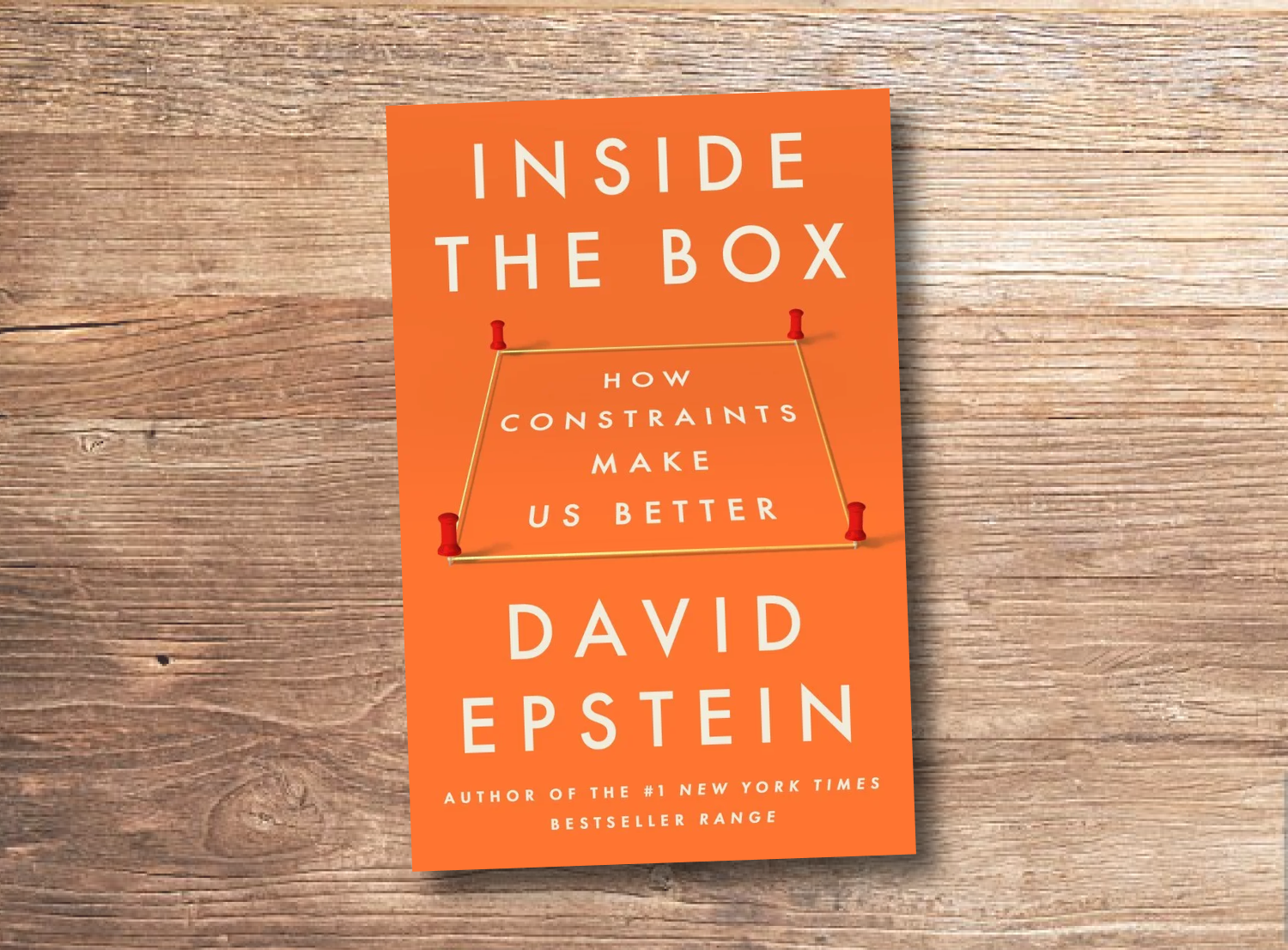
Worth buying as a hardcover so you can use it to hit the next person telling you to «think outside the box». A great collection of historical examples of how limitations, forcing you to think inside a clearly defined box, unlock creativity. Buy it here.

A gem from the archive
 David Bauer
The Weekly Filet archive offers more than 2900 hand-picked links since 2011, like this one. You can search by interests, explore collections or shuffle for a gem.
That's it for this week. Thanks for reading. I wish you a nice weekend and hope to see you again next Friday!
— David

Tools I use and recommend
- Readwise Reader – the GOAT. I couldn’t use the internet (or write this newsletter) without it.
- Snipd – made me switch podcast players after years. Killer feature: the «AI DJ» that picks the highlights of an episode and guides you through them
- Raindrop – where I store (and find again) every link I’ve ever deemed save-worthy, more than 20k so far.
- Mono – probably the best tool if you are using AI casually or still figuring out how to become a power user. Gives you access to all common models, but you pay only the price of one.
- Monologue – the tool that finally made dictation part of my everyday workflows. Use it mostly for text messages and for longer text input for large language models.
- Tally – nothing comes close for creating surveys. Rich in features, simple to use, very generous free plan.
If you sign up for these tools, I might get a commission. However, only tools that I wholeheartedly recommend made the list.